
SEO
Key Takeaways
- Diagnose before you act, because the fix for “no impressions” is different from the fix for “no clicks”
- Free tools like Google Search Console and Google Analytics show you where traffic is lost
- Paid ads, email, and promotion bring visits fastest, but they usually stop when you stop
- Search traffic takes months to build, yet it is the most durable source for most sites
- Target phrases you can win now instead of the biggest terms in your industry
- Good traffic is traffic that engages and converts, not just traffic that arrives
- Review results monthly and repeat what works
If you’re wondering how to increase traffic to your website, start by finding out why it’s low: pages that aren’t indexed, rankings without clicks, the wrong audience, or a site that drives visitors away. Then fix the technical basics, target keywords you can realistically win, publish content that answers real questions, and promote it through email, social media, and communities. Paid ads are the fastest source of visits, while search traffic takes longer but keeps compounding.
DID YOU KNOW
In a study of 14 billion pages, 96.55% got no traffic from Google at all. The most common reasons were targeting topics nobody searches for, having no backlinks, and not matching what searchers actually wanted.
Why Isn’t Your Website Getting Traffic?
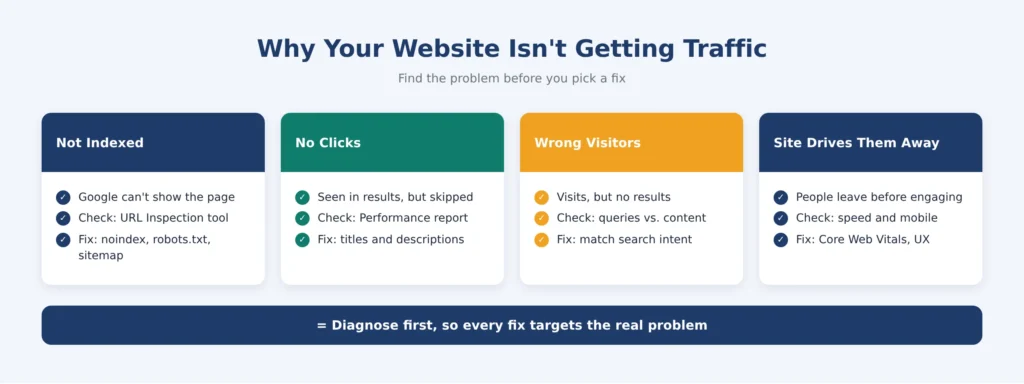
Before you work out how to improve website traffic, find where the problem sits. Most low-traffic sites fall into one of four situations.
Is It Indexed?
A page can only appear in search results if Google has indexed it. Open Google Search Console, paste the URL into the URL Inspection tool, and check whether it is indexed. The Page Indexing report shows which pages are excluded and why.
How Do You Increase Traffic to Your Website Fast and Keep It Growing?
Common causes include a noindex tag, a robots.txt rule blocking the page, no internal links pointing to it, or a very new site that Google has not fully crawled yet. Submitting a sitemap in Search Console helps Google discover your pages.
Is It Ranking but Not Getting Clicks?
Open the Performance report in Search Console and compare impressions, clicks, click-through rate, and average position. If a page has many impressions but few clicks, people see it and skip it. That usually points to a weak title, an unclear description, or a result that does not match what the searcher wanted.
PRO TIP
In Search Console’s Performance report, sort pages by impressions and look for ones with a click-through rate well below your site’s average. Rewriting those titles is often the quickest traffic win you have.
Is It Attracting the Wrong Visitors?
Traffic only helps if the visitors fit your business. If people arrive and leave quickly, compare the page’s content with the search terms bringing them in. A page that ranks for a phrase it does not truly answer will bring visits and no results.
Is the Site Itself Holding Visitors Back?
Slow loading, poor mobile layout, intrusive pop-ups, and confusing navigation all cause people to leave before they engage. These problems also make it harder to turn any new traffic into customers.
How Do You Increase Traffic to Your Website Step by Step?
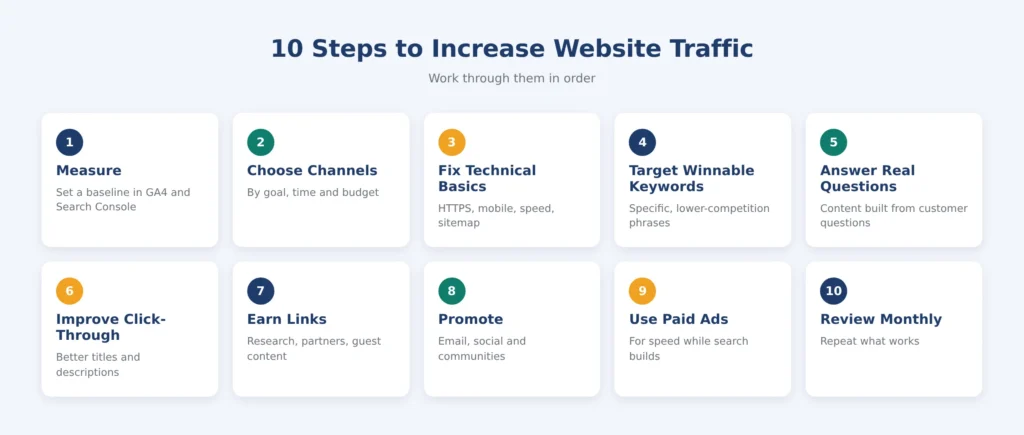
Once you know what’s holding the site back, here’s how to increase traffic to your website in ten steps, in order.
1. Measure Your Starting Point
You can’t judge progress without a baseline. Set up Google Analytics and Search Console, which are both free. Record your monthly sessions, your top landing pages, your top search queries, and where visitors come from. Also set up key events in Google Analytics, such as form submissions, calls, or purchases, so you can see whether traffic leads to results.
2. Choose Channels by Goal, Time, and Budget
There’s no single answer to how to generate traffic on a website. The right mix depends on how quickly you need results, how much you can spend, and how much time you have.
- Need visits this week and have budget: paid ads
- Have an existing audience: email and social media
- Willing to invest for the long term: search engine optimization and content
- Want credibility and referrals: partnerships, guest content, and PR
Pick one or two sources to do well instead of spreading effort across everything.
3. Fix the Technical Basics First
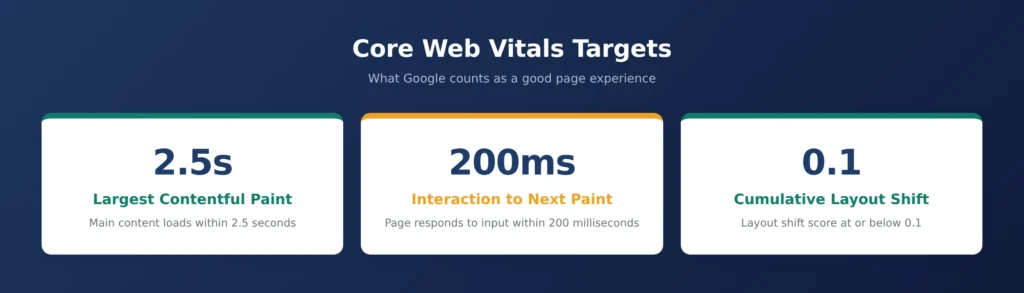
Technical problems limit every other effort. Make sure your site uses HTTPS, works well on mobile, has a sitemap, and has no broken pages or redirect loops. Pay attention to page experience too. Google’s Core Web Vitals measure loading speed, responsiveness, and visual stability. According to Google’s guidance, a good experience means the largest content loads within 2.5 seconds, interactions respond within 200 milliseconds, and the layout shift score stays at or below 0.1. If you want a closer look at what these measures mean and how to improve them, this guide to Core Web Vitals explains the process step by step.
4. Target Keywords You Can Actually Win
Chasing the most popular phrase in your field is rarely the fastest route. A newer or smaller site usually does better with specific, lower-competition phrases that match a clear need. Look at who ranks now, check what format they use, and ask whether you can offer something more useful or more specific. Keep in mind that keyword difficulty scores differ between tools, so use them as a rough guide, not a verdict. For a full process, see this walkthrough on how to do keyword research.
5. Create Content That Answers Real Questions
Search engines try to show pages that help the reader. To increase traffic through content, start with the questions your customers actually ask: sales calls, emails, support tickets, and the “People also ask” results on Google are good sources. Then answer them completely, with clear headings, examples, and original details from your own experience. Update older pages when facts change, because outdated content loses visitors over time.
GETMERANK TIP
Keep a running list of the questions your sales and support teams hear every week. Each one is a content idea that real customers have already asked for, which makes it far more likely to bring the right visitors.
6. Improve Click-Through With Better Titles and Descriptions
Your title is often the first thing a searcher judges. Include the main phrase, state the benefit clearly, and keep it honest. Meta descriptions do not directly affect rankings, but a clear one can improve clicks, and Google sometimes rewrites them to fit the query. Use the Performance report to find pages with high impressions and low click-through, then test new titles on those first.
7. Earn Links and Mentions
Links from reputable sites help search engines trust your pages, and they can send referral visitors directly. Ways to earn them include publishing original research or useful tools, contributing guest articles to relevant sites, working with partners, and getting listed in genuine industry resources. Avoid buying links or joining link schemes, because Google’s spam policies treat them as violations.
8. Promote Through Email, Social, and Communities
Publishing is only half the work. Someone has to see the page.
Email is one of the few channels you own. Collect subscribers with a useful offer, then send new content and updates. It brings repeat visitors without paying per click.
Social Media
Sharing content on social platforms can bring direct visits, build awareness, and help people find your brand through the platforms’ own search features. For a deeper look at how profiles and posts support visibility, read this social media SEO guide.
Communities and Forums
Industry forums, Q&A sites, and groups let you reach people who are already asking questions. Read the rules first, give real answers, and mention your content only where it genuinely helps. Posting links repeatedly with no useful contribution gets accounts banned and brings little traffic.
9. Use Paid Ads for Speed
Search ads and social ads can send visitors within hours of launching. They work best when you send people to a page that matches the ad, track conversions from the start, and set a budget you can sustain. The trade-off is that the traffic usually stops when the spend stops, so treat ads as a way to bring traffic to your website quickly while slower channels build. If you’d rather not manage campaigns yourself, a performance marketing team can set them up and run them for you.
10. Review and Repeat Monthly
Each month, check which pages, queries, and channels grew, which stalled, and which brought real conversions. Do more of what works, fix or merge pages that underperform, and set one or two focus goals for the next month. Small, consistent improvements beat large occasional pushes.
How Do You Get Traffic to Your Website Fast?
If you need to know how to get traffic to your website fast, these are the quickest options, from most to least immediate:
- Run paid ads. Search and social ads can bring visitors within hours.
- Email your existing audience. If you have subscribers or customers, a useful message about new content or an offer can bring visits the same day.
- Share on social platforms and in communities. Posting where your audience already spends time can bring a short burst of visits.
- Improve pages that already get impressions. If a page ranks on the second page or gets views without clicks, strengthening the content and the title can move it up faster than starting from scratch.
- Collaborate. Guest posts, podcast appearances, and partner mentions put you in front of someone else’s audience.
An honest note: fast traffic is usually temporary. Google says some changes take effect within a few hours, while others can take several months, so use speed tactics to get visits now while you build the sources that last.
HIGHLIGHT
Balanced take: fast traffic and lasting traffic come from different places. Use ads, email, and communities to get visits now, but put most of your long-term effort into search, links, and content that keeps earning without a budget behind it.
How Do You Keep Traffic Growing After the First Spike?
Short bursts fade. To keep growth going, build assets that keep earning:
- Build topic clusters. Cover a subject in depth with several linked pages, not one-off posts.
- Refresh your best pages. Updating pages that already rank is often the quickest way to protect and grow traffic.
- Strengthen internal links. Link new pages from relevant older ones so visitors and search engines move through your site.
- Grow your email list. It turns one-time visitors into returning ones.
- Diversify sources. Relying on a single channel leaves you exposed if it changes.
- Build your brand. People who remember you search for you directly, which is some of the most loyal traffic you can get.
Which Traffic Source Should You Start With?
| Source | Speed | Cost | Durability | Effort |
|---|---|---|---|---|
| Paid ads | Very fast | Ongoing spend | Stops when spend stops | Medium |
| Fast | Low | High, if you keep the list | Medium | |
| Social media | Fast to medium | Low to medium | Medium | High and ongoing |
| Communities and forums | Medium | Low | Medium | Medium |
| Search (SEO and content) | Slow | Low to medium | High | High upfront |
| Links and partnerships | Medium to slow | Varies | High | High |
If you need results this month, begin with ads or email. If you are building for the next year or more, give search the most effort, and use the faster channels to support it.
How Do You Know the Traffic Is Good Traffic?
More visits mean little if they do not lead anywhere. In Google Analytics, look at these signals:
- Engagement rate: The share of sessions that were engaged. In Google Analytics 4, an engaged session lasts longer than 10 seconds, includes a key event, or has at least two page views.
- Key events: Actions that matter to you, such as sign-ups, calls, or purchases
- Landing page performance: Which pages bring visitors who go on to act
- New versus returning visitors: A healthy site attracts both
- Search queries: In Search Console, check whether the phrases bringing people in match what you offer
If traffic rises but engagement and key events do not, the visitors probably do not match your offer, so revisit your targeting.
PRO TIP
In Google Analytics, compare engagement rate by landing page. Pages with plenty of visits but low engagement are usually attracting the wrong searches, and fixing their targeting can matter more than chasing new traffic.
Will AI Search Change How You Get Traffic?
AI-generated answers are now part of how many people search, and they can change which links get clicked. Google has said that the same foundational SEO practices still apply to its AI features: helpful content, a crawlable site, and pages that are indexed and eligible to appear. There is no special markup required. What it means in practice is that clear, accurate, well-structured content matters even more, and relying on one source of traffic is riskier than before. For a closer look at how to prepare, read this guide to Google AI Overviews optimization.
What Mistakes Slow Down Website Traffic Growth?
Strategy Mistakes
- Skipping diagnosis: Publishing more content when the real issue is indexing or click-through wastes effort
- Chasing only big keywords: Highly competitive terms rarely pay off for newer sites
- Counting visits instead of results: Traffic without conversions does not grow a business
- Relying on one channel: A single source can change or disappear
- Expecting instant search results: SEO is a build, not a switch
Execution Mistakes
- Publishing thin or copied content: Pages that add nothing new are unlikely to hold rankings
- Ignoring page speed and mobile experience: Visitors leave before they read
- Buying links: This can lead to ranking penalties
- Posting links everywhere with no value: Communities and platforms ignore or remove it
- Never updating old pages: Outdated content loses traffic quietly
- Not tracking: Without data, you cannot tell what is working
How Does Get Me Rank Help Increase Website Traffic?
Get Me Rank is a digital marketing agency that helps businesses grow traffic through a structured process instead of guesswork. The work typically begins with an audit of technical health, content, and search visibility, so the real causes of low traffic are clear. From there, the team builds a keyword and content plan around what your customers search for, fixes technical issues, earns quality links, and reports on leads and conversions, not only visits. If you would like a team to handle that process, you can learn more about Get Me Rank’s SEO services.
READY TO GROW?
Want traffic that turns into leads? Book a free strategy call, and we’ll audit your site, show you where traffic is being lost, and map out the fastest fixes first.
FAQs
1. How to increase traffic to your website?
Start with diagnosis, not tactics. Check Search Console to see whether the problem is indexing, rankings or clicks, and fix the weakest stage first. Then pair one fast channel, such as ads or email, with one long-term channel, such as search content, so you get visits now while building traffic that lasts.
2. How to improve website traffic when it suddenly drops?
Rule out tracking first, because a broken Analytics tag can look exactly like a traffic drop. Then check Search Console for pages that lost impressions, look for technical changes like a new noindex tag or a site migration, and compare the timing with seasonal patterns or known Google updates. Fix the cause before adding new content.
3. How to bring traffic to your website if it’s new?
If you’re working out how to bring traffic to your website when it’s brand new, keep the focus narrow. A new site has little authority, so start with specific, low-competition topics, submit a sitemap in Search Console, and check that your pages are indexed. Promote each post through email, social platforms, and relevant communities, and use paid ads for early visits while rankings build.
4. How to generate traffic on a website for free?
Almost every channel has a free route: optimizing content for search, sharing on social media, answering questions in communities, building an email list, guest posting, and updating older pages. They cost time instead of money, and results usually arrive more slowly than with paid methods.
5. How to get traffic to your website fast without paid ads?
Email your existing customers, share the page in communities where your audience already asks questions, and improve pages that already sit on page two of Google. Partner mentions and guest spots on podcasts or newsletters can also send visitors within days.
6. How long does it take to see more traffic?
It depends on the channel. Ads and email can bring visits within hours or days. For search, Google says some changes take effect within hours while others can take several months, and new sites or competitive topics usually take longer.
7. Can Get Me Rank help increase traffic to my website?
Yes. Get Me Rank starts with an audit of your technical health, content, and search visibility to find what’s actually holding traffic back. From there, the team builds a keyword and content plan, fixes technical issues, earns quality links, and reports on leads and conversions, not just visits.
Conclusion
Growing traffic comes down to a clear order of work: diagnose what is wrong, fix the foundation, aim at keywords you can win, create content that answers real questions, and promote it where your audience is. Use paid ads, email, and social promotion when you need speed, and invest in search when you want growth that lasts. Review the numbers every month, keep what works, and drop what does not. Steady, measured effort will increase traffic over time and keep it growing.