Social Media Marketing
Key Takeaways
- Your audience is layers, not a lump — demographics, psychographics, behaviours and platform habits all shape how you should talk to them.
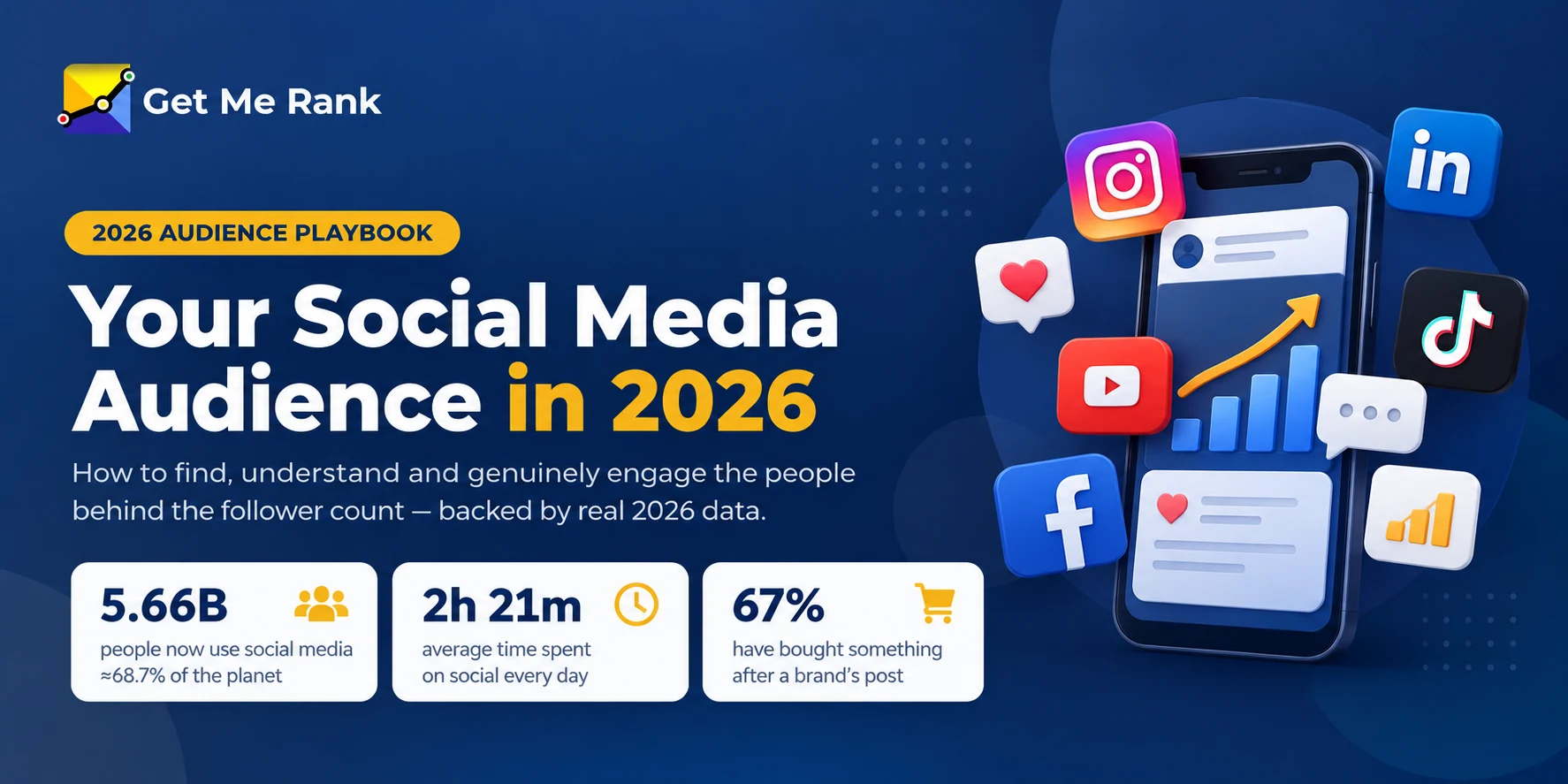
- The opportunity is huge: around 5.66 billion people now use social media (~68.7% of the planet), spending an average of 2h 21m a day.
- Knowing who you serve pays off — 67% of users have bought something after seeing it in a brand’s post, and 90% of Instagram users follow at least one business.
- Every platform draws a different crowd, so the same post can win on TikTok and sink on LinkedIn — match the channel to the people.
- AI is the 2026 game-changer: 62% of enterprise teams now use AI for audience segmentation, lifting conversions 20–30% over old rule-based methods.
It is easy to obsess over follower counts. But a number on a profile tells you almost nothing about whether those people will read, trust, or buy from you. What actually matters is the human reality behind it, and that is what your social media audience really is.
In 2026, the brands winning attention are not the ones shouting at everyone. They are the ones who know exactly who they are for, where those people spend their time, and what makes them stop scrolling. This guide walks you through how to find, understand, and genuinely engage your audience, using real current data, platform-by-platform insight, and the AI tools now reshaping how audiences are understood.
KEY POINT
A complete audience picture needs all four layers: demographics, psychographics, behaviours and platform habits. Demographics alone are just a sketch.
What Is a Social Media Audience?
Think of it as three concentric circles. At the centre are your followers, people who chose to connect. Around them is your engaged audience, those who like, comment, save, and share. And beyond that sits your reachable audience, everyone the algorithm could put your content in front of. Growth comes from moving people inward, from reachable to engaged to loyal.
REMEMBER
Four layers define who your audience really is: demographics (who they are), psychographics (what they value), behaviours (what they do), and platform habits (where they spend time). Together they turn a number into a person.
Why Does Understanding Your Audience Matter in 2026?
Audiences in 2026 expect brands to feel like they are speaking directly to them. Generic posts get ignored; relevant ones get bought. The numbers back it up.
DID YOU KNOW
67% of social media users have bought something after seeing it in a brand’s post, and 90% of Instagram users follow at least one business. When you know your audience, discovery and sales follow.
- It sharpens every message. Knowing your audience’s language, goals and pain points turns bland content into content that resonates.
- It drives real sales. With 67% of users buying after a brand post, the better you target, the more those posts convert.
- It saves budget. Reaching the right 10,000 people beats paying to reach 100,000 who will never care.
- It builds lasting loyalty. Strong digital audience engagement compounds; engaged people come back, advocate, and bring others with them.
How Do You Find Your Target Audience on Social Media?
Six steps from guessing to a data-backed picture of who you serve.
Your Social Media Audience in 2026: How to Find, Understand and Engage Them
- Start with your best customers. Look at who already buys and what they have in common: age, location, interests, and the problems you solve for them.
- Mine your own analytics. Native insights on Instagram, TikTok and LinkedIn show exactly who follows and engages, broken down by age, gender and location.
- Study the competition. See who interacts with similar brands and the gaps they ignore; that is where you can win attention.
- Build audience personas. Turn the data into two or three clear profiles, each with goals, habits, and pain points you can write for.
- Match personas to platforms. Each persona lives somewhere specific; meet them where they already scroll rather than spreading thin everywhere.
- Test, listen, and refine. Use social listening and your comment section to keep the picture current. Your target audience on social media shifts, so your understanding should too.
GETMERANK TIP
Don’t build personas and forget them. Revisit your audience data quarterly; platforms evolve, demographics shift, and the audience that followed you six months ago may not be the one engaging today.
What Influences Digital Audience Engagement?
Digital audience engagement is never luck. When a post lands flat, the reason almost always traces back to one of a few controllable factors:
- Relevance to the person. Content built around a specific audience’s needs outperforms anything generic.
- Format fit. Video and carousels consistently out-engage static posts, Instagram video alone gets around 49% more engagement than photos.
- Timing. Posting when your people are actually online decides how far a post travels in its crucial first hour.
- Emotion and story. Posts that make people feel something get shared; neutral updates get scrolled past.
- Responsiveness. How fast and warmly you reply shapes whether people bother to engage again.
How Does Your Audience Behave Differently Across Platforms?
One of the biggest mistakes brands make is treating every platform the same. Here is how the major networks break down in 2026, so you can adapt content to where your people actually are.
| Platform | Monthly Active Users | Dominant Age Group | What Wins |
|---|---|---|---|
| TikTok | ~1.99B | 25–34 | Trend-led discovery, short video |
| ~3B | 18–34 | Visual brand-building, product discovery | |
| ~3.07B | All ages | Community, local reach, support | |
| YouTube | ~2.58B | Gen Z (91% usage) | How-to, long-form video |
| ~1.3B | 25–44 (male-skewing) | B2B, thought leadership | |
| X (Twitter) | ~557M | 25–34 (widest male skew) | Real-time news, conversation |
HIGHLIGHT
YouTube is the #1 platform for Gen Z at 91% usage, yet many B2C brands still overlook it in favour of TikTok and Instagram. If your audience skews young, YouTube deserves a serious place in your strategy.
How Can Businesses Improve Customer Engagement With Their Audience?
Six moves that turn a passive audience into an engaged community.
- Speak their language. Mirror the words, humour, and tone your audience already uses, so your content feels native, not corporate.
- Lead with value. Give tips, answers, and entertainment before you ask for anything; it earns the right to sell later.
- Reply like a human. Fast, warm responses turn a one-time follower into a regular and signal to the algorithm that your post is alive.
- Invite participation. Polls, questions, and challenges make your audience part of the story rather than spectators.
Sustaining all of this, consistent posting, fast replies, platform-specific content- is a real workload. It is why many growing brands bring in a dedicated social media marketing service to keep the engine running while they focus on the business.
PRO TIP
Responding within the first hour can multiply a post’s reach. Treat your comment section like a conversation, not a noticeboard; each reply counts as an interaction and invites the next one.
Creating Authentic Content That Encourages Interaction
Audiences in 2026 have a finely tuned radar for anything that feels staged. The content that earns comments and shares is the content that feels human:
- Creator and UGC videos – Authentic UGC videos from real customers and creators build trust faster, and at lower cost, than studio ads.
- Behind-the-scenes & founder stories – showing the people behind the brand creates the connection a logo never can.
- Customer spotlights – featuring your audience turns them into advocates and gives others a reason to join in.
- Honest, useful posts – answering real questions plainly earns more saves than any hard sell.
How to Measure and Analyze Your Social Media Audience
A good audience analysis is less about vanity metrics and more about understanding people. These four lenses keep you focused on what actually drives growth.
| Lens | What It Covers | Key Question |
|---|---|---|
| Who — Audience Make-up | Age, location, language, and interests | Is it who you meant to reach? |
| Where — Platform & Timing | Which networks and hours your people are active on | Are you showing up where they are? |
| What — Content Resonance | Posts, formats, and topics earning saves, shares, comments | What’s driving your social media engagement? |
| How — Growth & Sentiment | Follower quality, engagement rate, and audience sentiment | How do people actually feel about you? |
How Is AI Changing the Way You Analyze Your Audience in 2026?
This is where 2026 pulls away from the past. AI does not replace understanding your audience — it supercharges it, catching signals humans miss and freeing teams to act on them. The adoption curve is steep.
- Real-time segmentation. AI groups people by live behaviour, not stale demographics — manual segments miss around 41% of high-intent signals AI catches.
- Predictive insight. It flags who is about to buy, churn or disengage, so you act before the moment passes.
- Sharper personalization. AI-built segments lift conversions 20–30% over rule-based groups and free up around 8.5 hours a week per team.
AI is also blurring the line between social and search. As audiences increasingly ask AI assistants for recommendations, the signals your content creates on social feed directly into that visibility — which is why Social media SEO now sits alongside audience strategy rather than apart from it.
IMPORTANT
62% of enterprise teams now use AI for audience segmentation. Manual segments miss around 41% of high-intent signals — AI catches them in real time, lifting conversions 20–30% over rule-based methods.
Common Audience Mistakes to Avoid in 2026
Swap these habits for the ones on the right to grow a healthier audience.
| Mistake | Better Approach |
|---|---|
| Treating every platform the same | Adapt content to each platform’s audience and format |
| Chasing follower count over engagement | Focus on building an engaged community, not a big number |
| Relying on stale personas | Revisit audience data quarterly and update your profiles |
| Ignoring AI tools for segmentation | Use AI to catch the 41% of high-intent signals you’re missing |
| Posting without checking analytics | Let data tell you who engages, when, and with what |
Where Get Me Rank Fits In
At Get Me Rank, we start every social strategy with the audience, not the post. By combining audience intelligence, platform-specific content, and AI-search optimisation, we help brands reach the right people and turn them into a community that compounds across social feeds and the AI answers customers now rely on.
READY TO GROW?
Stop guessing who your audience is. Book a free strategy call, and we’ll show you exactly who you should be reaching and how to turn them into customers.
Frequently Asked Questionsz
1. What counts as my audience on social media?
Everyone who sees, follows or interacts with your brand across platforms: loyal followers, passive viewers, and the wider pool the algorithm can still reach. Growth means moving people from that outer pool toward loyalty.
2. How do I find out who my audience actually is?
Begin with your existing customers and your native platform analytics, study who engages with competitors, then build two or three personas. Refine them continuously with social listening — audiences evolve.
3. What does an audience analysis involve?
It’s the process of studying who your audience is, where and when they are active, what content they respond to, and how their sentiment is trending — so you can make informed content and targeting decisions.
4. How is social media customer engagement different from reach?
Reach is how many people saw your content; engagement is how many actually interacted. Reach is exposure, engagement is relationship — and it’s engagement that builds trust and sales.
5. Do I really need AI to understand my audience?
You don’t need it to start, but it’s fast becoming the edge. With 62% of enterprise teams already using AI for segmentation and 20–30% higher conversions as a result, it increasingly separates leaders from laggards.
Conclusion
Behind every follower count is a real person with specific needs, habits and platforms they call home. The brands that win in 2026 are the ones who treat their social media audience as people to understand, not numbers to chase. Find them with data, meet them on the right platform, speak to them authentically, and let AI sharpen the picture — and your reach, trust and results all follow.