Ecommerce ManagementMarketplace
Key Takeaways
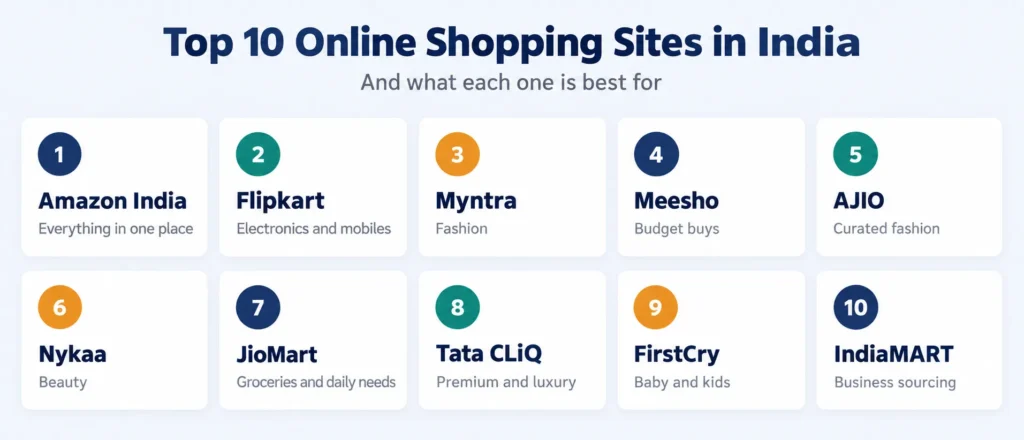
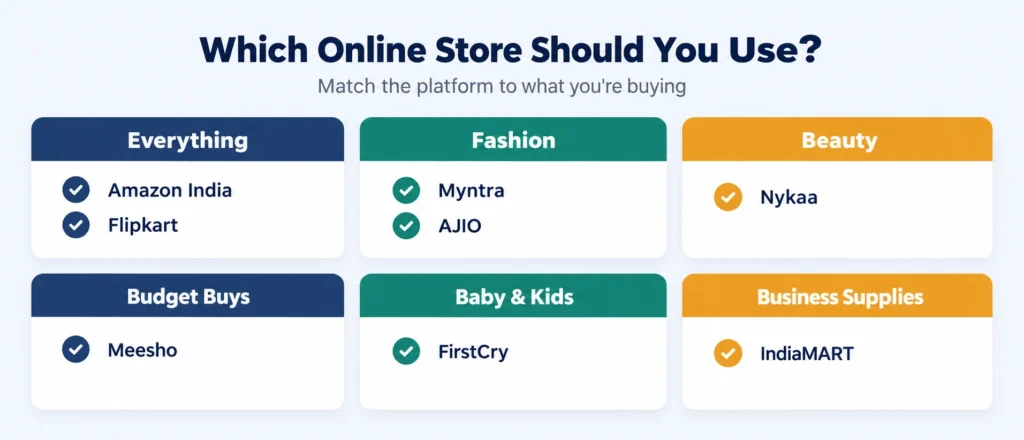
- Amazon India and Flipkart cover a broad range of shopping categories.
- Myntra and AJIO have a strong focus on fashion and lifestyle products.
- Nykaa primarily serves shoppers looking for beauty, personal care, and lifestyle products.
- FirstCry focuses on baby, kids, and parenting products.
- JioMart offers categories ranging from groceries to electronics and fashion.
- IndiaMART is different from conventional consumer shopping sites because its core focus is business-to-business buying and supplier discovery.
- The right e-commerce platform depends on the product, price, delivery location, returns, and individual shopping requirements.
Online shopping has changed how people across India buy everything from groceries and clothes to electronics, beauty products, and household essentials. With multiple platforms competing across different categories, shoppers now have more choice than ever.
Some online stores in India focus on almost every product category, while others specialise in areas such as fashion, beauty, baby products, or business supplies. This guide looks at the top 10 online shopping sites in India, what each ecommerce store offers and how they differ from one another.
DID YOU KNOW
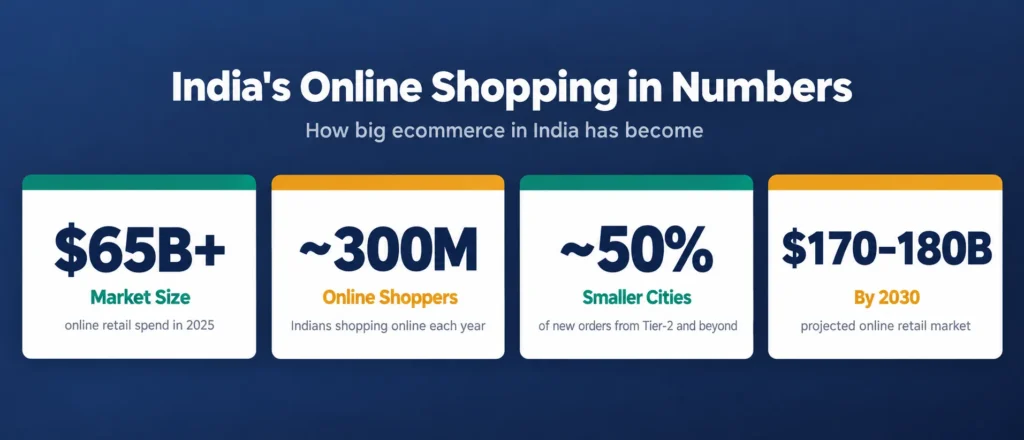
India’s online retail market crossed $65 billion in 2025, and close to 300 million Indians now shop online every year.
The Growing Popularity of Online Shopping in India
Shopping online is no longer limited to electronics or fashion. Consumers can now order groceries, furniture, medicines, beauty products, appliances, baby products, and everyday essentials through websites and mobile apps.
Convenience is a major reason behind this change. Shoppers can compare products, read reviews, check prices, and place orders without visiting multiple physical stores. Digital payment options, home delivery, and access to products beyond local markets have also made shopping on e-commerce sites more practical.
DID YOU KNOW
Online shopping is no longer a big-city habit. Tier-2 and smaller cities accounted for about half of all new online orders in 2025.
At the same time, different online stores in India serve different needs. A shopper looking for clothing may prefer a fashion-focused platform, while someone buying a smartphone may choose a large multi-category marketplace.
Top 10 Ecommerce Websites and Online Stores in India
Understanding what each platform offers can therefore make online shopping easier.
Top 10 Ecommerce Websites and Online Stores in India
1. Amazon India
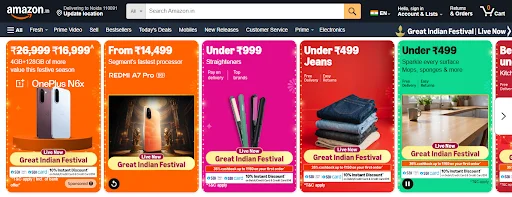
Amazon India is one of the most recognisable multi-category online shopping platforms in the country. Shoppers can find products across electronics, fashion, home improvement, appliances, books, computer accessories, fitness products, and several other categories.
Its broad catalogue makes it useful for consumers who prefer searching for different types of products on one platform. Customers can also compare multiple sellers, prices, product specifications, and reviews before purchasing.
For everyday shoppers, its wide category coverage is one of its biggest distinguishing features.
2. Flipkart
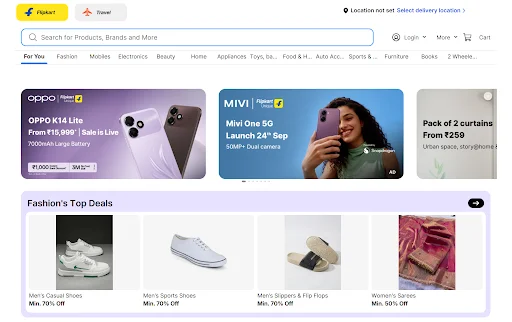
Flipkart is another major name among e-commerce websites in India. Founded in 2007, it has grown from its early roots in online retail into a large multi-category shopping platform.
Its website features products covering areas such as electronics, smartphones, appliances, books, fashion, furniture, and groceries. Flipkart states that its platform covers more than 150 million products across over 80 categories. It also reports more than 500 million registered users and around 1.4 million sellers.
It is particularly familiar to Indian consumers shopping for mobile phones, consumer electronics and household products, while also offering a substantial fashion and lifestyle selection.
PRO TIP
During big sale events, add items to your cart or wishlist a few days early. It’s the easiest way to see whether the “sale price” is a genuine drop or close to what the product usually costs.
3. Myntra
Myntra is primarily associated with fashion and lifestyle shopping. Rather than trying to cover every possible retail category, the platform has built its identity around clothing, footwear, accessories, and related products.
Its catalogue includes fashion for men, women, and children, with categories ranging from T-shirts and shirts to casual shoes, sports shoes, and other apparel.
For shoppers whose main priority is clothing or personal style, Myntra provides a more fashion-focused browsing experience than a general marketplace.
4. Meesho
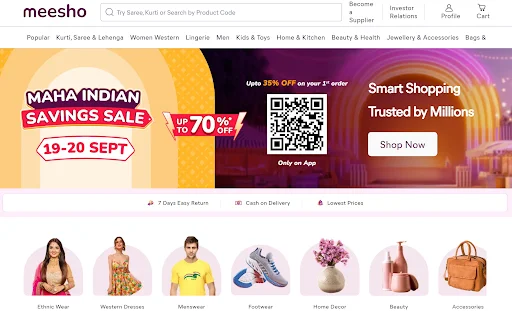
Meesho has become a familiar name in India’s value-focused ecommerce market. Its platform includes products across fashion, beauty, home, kitchen accessories, and other everyday lifestyle categories.
A major part of its appeal is its emphasis on affordable products and a wide range of sellers. This makes it relevant for shoppers who are highly price-conscious or looking for lower-cost alternatives across everyday categories.
Compared with more premium-focused online stores, Meesho generally positions itself around accessible online shopping and value.
5. AJIO
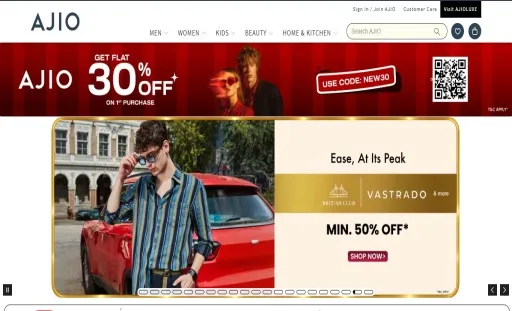
AJIO is a fashion and lifestyle shopping platform with a strong emphasis on personal style. Its selection includes clothing, footwear, accessories, and fashion collections for women, men, and children.
The platform also promotes its own private label, AJIO OWN, along with international labels and curated fashion collections. Its women’s section, for example, covers western wear as well as ethnic categories such as kurtas, sarees, salwars and traditional outfits.
AJIO can therefore be particularly useful for shoppers who want a fashion-led e-commerce store rather than a general marketplace.
PRO TIP
Sizes vary from brand to brand on fashion platforms. Check the brand’s own size chart and the return or exchange window before ordering, especially for footwear and ethnic wear.
6. Nykaa
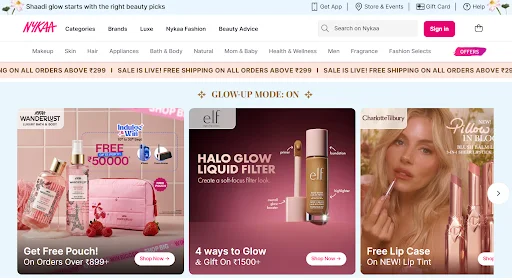
Nykaa began as a digital-first beauty business and has since expanded into fashion and other segments. The company describes its current offering as spanning makeup, skincare, haircare, fragrance, wellness and fashion, alongside its online and offline operations.
Beauty remains central to its identity, making Nykaa one of the more specialised online stores in India.
Consumers commonly use the platform for cosmetics, personal care, skincare and grooming products, while Nykaa Fashion extends the company’s reach into clothing and lifestyle shopping.
PRO TIP
For beauty and skincare, buy from the platform’s official brand store or a verified seller, and check the expiry or manufacturing date as soon as the order arrives.
7. JioMart
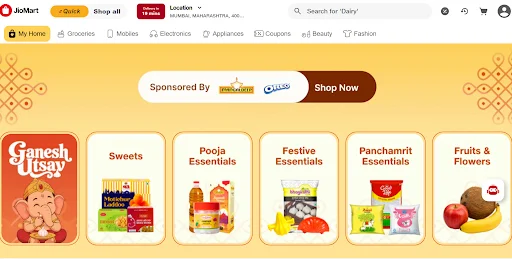
JioMart has expanded beyond its strong association with grocery shopping into a broad online retail platform.
Its current categories include grocery, electronics, fashion, beauty, home and kitchen products, books and furniture. Reliance Retail describes JioMart as an online marketplace designed to provide shopping across categories including electronics, grocery, fashion, home and kitchen.
This makes the platform useful for customers who want to combine household and everyday purchases with other retail categories in one place.
8. Tata CLiQ
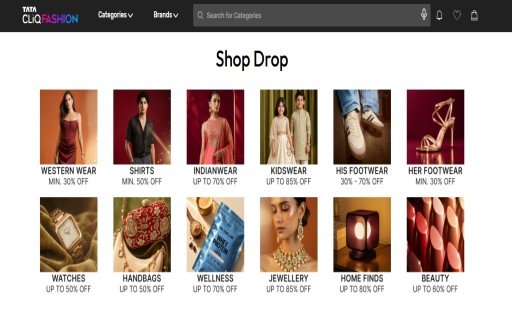
Tata CLiQ is part of Tata’s e-commerce ecosystem and has historically positioned itself around a more curated online shopping experience.
Its offering includes fashion, footwear, accessories, and other lifestyle categories, while Tata CLiQ Luxury caters separately to premium and luxury labels. The company has also followed an omnichannel marketplace model that links online shopping with physical retail.
This connection between digital shopping and physical retail helps differentiate it from platforms operating only as online marketplaces.
DID YOU KNOW
Tata CLiQ runs a separate platform, Tata CLiQ Luxury, launched in 2016, dedicated to premium and luxury fashion and accessories.
9. FirstCry
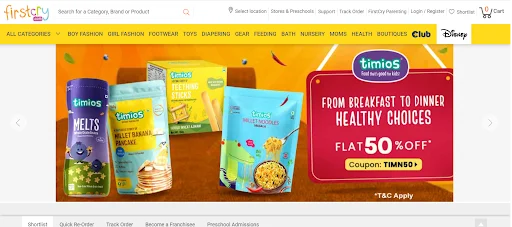
FirstCry specialises in products for babies, children and parents. Its range includes diapers, baby food, infant accessories, strollers, nursery furniture, clothing, footwear, toys and school-related products.
Instead of competing as a general-purpose e-commerce marketplace, FirstCry focuses heavily on the parenting journey.
The company describes its Indian operation as a multi-channel retail platform serving mothers, babies and children through online shopping, physical stores and other retail channels.
This specialist focus makes it particularly relevant for parents looking to shop across several children’s categories in one place.
10. IndiaMART
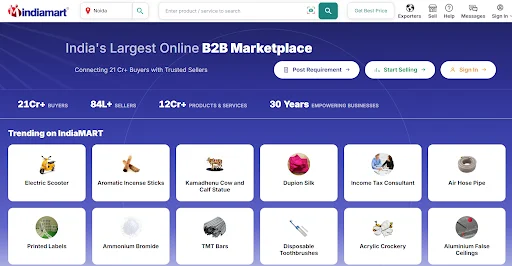
IndiaMART differs from most of the other names on this list because its primary purpose is connecting businesses, buyers, manufacturers, and suppliers.
Rather than focusing mainly on conventional consumer shopping such as clothing or beauty products, it is commonly used for sourcing business products, machinery, industrial supplies, wholesale goods, and other commercial requirements.
For this reason, IndiaMART is better viewed as a B2B ecommerce marketplace than a traditional consumer-focused ecommerce store.
GETMERANK TIP
Selling online yourself? Marketplaces bring instant reach, but your own online store gives you control over pricing, branding, and customer data. Most growing brands use both, with search visibility driving shoppers to their own site.
Comparison of Popular Ecommerce Websites in India
Different top ecommerce companies in India have developed around different product categories and customer needs. The table below provides a quick comparison.
| Ecommerce Website | Main Categories | Platform Focus | Best Known For | Launched | Parent Company |
|---|---|---|---|---|---|
| Amazon India | Multi-category | Marketplace | Wide product selection | 2013 | Amazon |
| Flipkart | Multi-category | Marketplace | Electronics and general retail | 2007 | Walmart |
| Myntra | Fashion | Fashion ecommerce | Clothing and lifestyle | 2007 | Flipkart Group |
| Meesho | Multi-category | Value ecommerce | Affordable products | 2015 | Meesho Ltd |
| AJIO | Fashion | Fashion ecommerce | Fashion and lifestyle | 2016 | Reliance Retail |
| Nykaa | Beauty & lifestyle | Specialist ecommerce | Beauty and personal care | 2012 | FSN E-Commerce Ventures |
| JioMart | Grocery & multi-category | Online retail | Groceries and daily essentials | 2020 | Reliance Retail |
| Tata CLiQ | Fashion & lifestyle | Online retail | Curated shopping | 2016 | Tata Digital |
| FirstCry | Baby & kids | Specialist ecommerce | Parenting products | 2010 | Brainbees Solutions |
| IndiaMART | Business products | B2B marketplace | Supplier and business sourcing | 1996 | IndiaMART InterMESH |
The table also shows why it is difficult to identify one platform as the best for every shopper. Each serves a somewhat different purpose.
Which Is the Largest Ecommerce Company in India?
There is no single answer to the question of the largest e-commerce company in India unless the metric being compared is clearly defined.
An e-commerce company can be considered large based on revenue, gross merchandise value, number of active customers, website traffic, order volume, product selection, or overall market share. Those measures can produce different results.
Amazon and Flipkart are major broad-market e-commerce platforms, while companies such as Nykaa, FirstCry and Myntra operate strongly within particular shopping categories.
Therefore, when comparing the top e-commerce companies in India, it is better to look at the specific metric and time period instead of assuming that one company is automatically the largest across every measure.
HIGHLIGHT
Balanced take: a ranking by registered users, app downloads, revenue or order volume can each put a different company on top. Whenever you see a “largest ecommerce company” claim, check which metric and which year it is based on.
How to Choose the Right Ecommerce Platform to Sell On in India
For sellers, choosing where to list is just as important as choosing what to sell. Each platform attracts a different type of shopper, charges different fees, and sets its own rules, so the right fit depends on your category, margins, and growth plans.
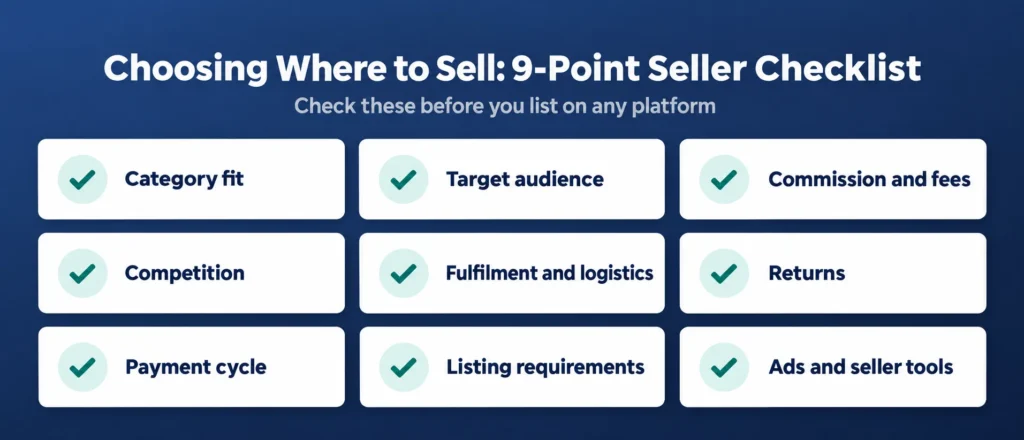
Before listing your products, consider:
- Category fit: Does the platform’s audience already buy what you sell? Fashion brands often start on Myntra or AJIO, beauty brands on Nykaa, baby products on FirstCry, and B2B suppliers on IndiaMART.
- Target audience and price point: Value-focused platforms such as Meesho suit budget products, while curated platforms such as Tata CLiQ suit premium and luxury labels.
- Commission and fees: Compare commission rates, fixed or closing fees, shipping charges, and payment fees, and calculate what you actually keep per order.
- Competition and visibility: Check how many sellers already offer similar products and whether you can realistically rank in the platform’s search without heavy ad spend.
- Fulfilment and logistics: Decide whether to ship orders yourself or use the platform’s fulfilment programme, and check delivery coverage across PIN codes.
- Returns: Return rates vary widely by category, especially in fashion, and every return eats into your margin.
- Payment cycle: Understand when and how payouts are settled, because slow settlements can strain cash flow.
- Listing requirements: Review catalogue rules, image specifications, brand approvals, and any category restrictions before you onboard.
- Ads and seller tools: Look at the advertising options, analytics dashboards, and seller support each platform offers, since these shape how fast you can grow.
The best ecommerce platform in India for your brand is usually the one where your target customers already shop and your margins still work after fees, returns, and advertising. Many sellers start on one or two marketplaces and add their own ecommerce store as they grow.
PRO TIP
Before you list, work out your true margin per unit after commission, platform fees, shipping, expected returns and ad spend. A product that looks profitable at its listing price can lose money once it starts selling at scale.
GETMERANK TIP
Don’t list your full catalogue everywhere on day one. Start on the marketplace that best matches your category, test a second one with your 10 to 20 strongest products, and expand once you know where your margins and sales actually hold up.
Why Are Ecommerce Websites So Popular in India?
Ecommerce websites in India make shopping more convenient by allowing consumers to browse large product selections without travelling between physical stores.
Smartphones and digital payments have also made purchasing easier, while home delivery gives shoppers access to brands and products that may not be available locally.
DID YOU KNOW
India is one of the world’s leading quick commerce markets. Roughly 1 in 6 rupees spent on e-commerce in 2025 went through quick commerce apps that deliver in minutes.
Online platforms make price and product comparisons relatively simple as well. Customers can review specifications, compare sellers and read feedback before purchasing.
Another advantage is category choice. A customer can buy fashion, electronics, groceries, beauty products, or children’s essentials from specialised platforms or broad marketplaces depending on their needs.
Together, these factors have made ecommerce an established part of everyday retail shopping in India.
How GetMeRank Helps Brands Grow on India’s Top Ecommerce Platforms
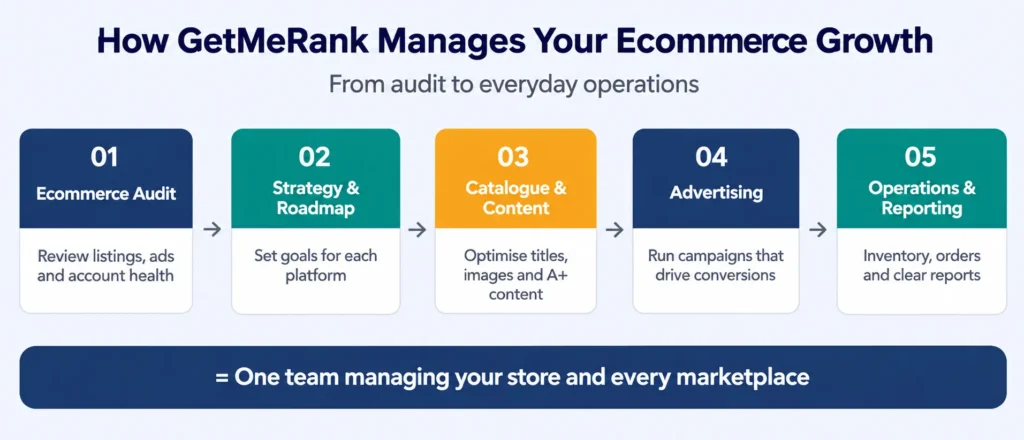
Listing products on Amazon, Flipkart, or Myntra is only the starting point. Getting found in a crowded marketplace, keeping catalogues accurate, running profitable ads, and managing orders across several platforms quickly becomes a full-time job. GetMeRank’s ecommerce management services take that work off your plate, so you can focus on products and growth.
- Marketplace account management: end-to-end handling of Amazon, Flipkart, Myntra, Meesho and Nykaa seller accounts, from listings to account health.
- Listing and catalogue optimisation: search-friendly titles, descriptions, A+ content and images that help products rank inside marketplace search.
- Marketplace advertising: PPC campaigns built for discoverability, conversions, and a healthy return on ad spend.
- Your own ecommerce store: Shopify and WooCommerce store management, backed by ecommerce SEO so shoppers find you on Google, not only on marketplaces.
- Quick commerce: listings and visibility on Blinkit, Zepto and Swiggy Instamart for brands selling in fast-delivery channels.
- Operations and reporting: inventory updates, order coordination and clear reports on revenue, ad ROI and conversion rates.
Whether you’re launching your first ecommerce store or scaling across several marketplaces, the goal stays the same: more visibility, better margins and less time spent on day-to-day operations.
READY TO GROW?
Want shoppers to find your products first? Book a free strategy call, and we’ll map an e-commerce growth plan across your own store and the marketplaces you sell on.
Conclusion
The growth of online stores in India has given consumers more options for almost every type of purchase. Large marketplaces such as Amazon India and Flipkart cover numerous categories, while specialist platforms such as Myntra, AJIO, Nykaa and FirstCry provide more focused shopping experiences.
There is therefore no single e-commerce website that is ideal for everyone.
When comparing the top e-commerce websites in India, shoppers should consider the product they need, seller information, total price, delivery availability, return policies, and customer support. Comparing these factors instead of choosing a website based only on discounts can help consumers find the platform that best suits their shopping requirements.
Frequently Asked Questions About Ecommerce Websites in India
1. What are the top e-commerce websites in India?
Some widely used e-commerce websites in India include Amazon India, Flipkart, Myntra, Meesho, AJIO, Nykaa, JioMart, Tata CLiQ, and FirstCry. IndiaMART is also significant for B2B e-commerce and supplier sourcing.
2. Which online store is best in India?
There is no single best e-commerce platform in India for every purchase. Amazon and Flipkart cover many categories, Myntra and AJIO focus strongly on fashion, Nykaa specialises in beauty, and FirstCry focuses on baby and children’s products.
3. Which is the largest e-commerce company in India?
The answer depends on the metric used, such as revenue, GMV, customer numbers, traffic, or market share. For an accurate comparison, the metric and reporting period should always be specified.
4. Which online stores in India are good for fashion?
Myntra and AJIO are primarily fashion-focused platforms. Other ecommerce sites, including Amazon, Flipkart, Nykaa Fashion, and Tata CLiQ, also sell fashion and lifestyle products.
5. Which ecommerce websites in India sell beauty products?
Nykaa has a strong specialist focus on makeup, skincare, haircare, fragrance, and wellness products. Beauty products are also available on broader platforms including Amazon, Flipkart, Myntra, AJIO, and JioMart.
6. Which is the best ecommerce platform in India for sellers?
It depends on what you sell and who you sell to. Amazon and Flipkart offer the widest reach; Myntra and AJIO suit fashion brands; Nykaa suits beauty brands; Meesho suits value-focused products; and IndiaMART suits B2B suppliers. Many brands combine one or two marketplaces with their own e-commerce store.