Uncategorized
Key Takeaways
- In early October 2026, OpenAI began testing descriptive labels on ChatGPT’s organic product results — tags like “best all-rounder,” “best for beginners,” and “best cushioning.”
- A green label marks the top overall pick; gray labels flag products that win on a specific criterion.
- The labels sit on organic results, not ads — OpenAI says product results are selected independently and are not influenced by partnerships.
- The test was first spotted by SEO consultant Brodie Clark and reported by Search Engine Roundtable and Search Engine Watch on 6 October 2026.
- It is a test, not a confirmed global rollout — OpenAI has issued no statement, and the scope and duration are unknown.
- To be in the running, brands need clean product feeds, clear “best for X” positioning, strong structured data, and earned mentions — backlinks barely move AI visibility.
Did You Know
ChatGPT’s product results are selected independently by ChatGPT and are not ads. When a product is labelled the “best all-rounder,” that placement is earned, not bought.
For years, finding the “best” product online meant opening ten tabs, skimming review sites, and piecing together a decision yourself. AI assistants have started doing that work for you — and ChatGPT is now making its recommendations even easier to scan.
In early October 2026, OpenAI began testing descriptive product labels on ChatGPT’s organic product results: small tags like “best all-rounder” or “best for beginners” that sit right on the recommended products. It’s a small visual change with big implications for how people shop — and how brands get discovered. Here’s exactly what’s being tested, how ChatGPT chooses the products it labels, and what it means for your store.
How a Labelled Recommendation Is Built
ChatGPT assembles a labelled product recommendation in three broad moves. Understanding them shows you where a brand can actually influence the outcome.
01
Read the query & context
ChatGPT interprets what you asked, the conversation around it, and (where relevant) memory and custom instructions.
02
Pull product data
It draws on structured metadata from product feeds plus other third-party content — price, descriptions, availability and more.
03
Rank & label
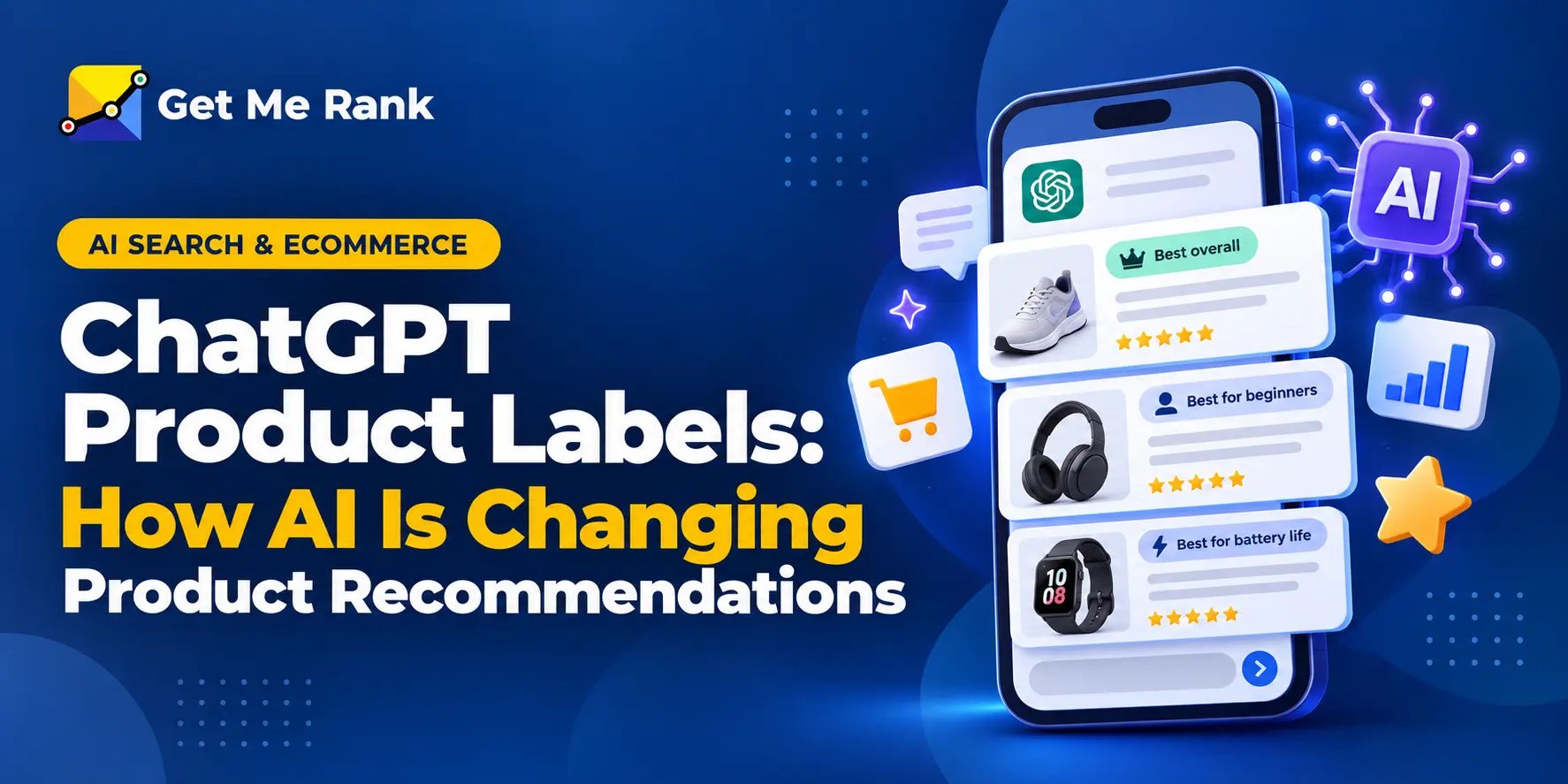
It shortlists products, then applies the “best for X” labels — green for the top pick, gray for category winners.
= A scannable, labelled shortlist built from your query and the best available product data
What Are ChatGPT Product Labels?
ChatGPT product labels are short descriptive tags attached to the products ChatGPT recommends, summarising why a particular item stands out. Instead of leaving you to read the full write-up, ChatGPT flags a product as the “best all-rounder,” “best for beginners,” “best cushioning,” and so on — turning a wall of text into a scannable, labelled shortlist.
The new test was first spotted by SEO consultant Brodie Clark, who shared it on X and on his SERP timeline in October 2026. It was then reported by Search Engine Roundtable and Search Engine Watch, both on 6 October 2026.
ChatGPT Product Labels: How AI Is Changing Product Recommendations
What the New Labels Look Like
This is a new variation that expands on an earlier version of the labels OpenAI had already been showing. Here is how the labels work:
| Label | Colour | What it means |
|---|---|---|
| Best all-rounder | Green | The single top overall pick for the query |
| Best for beginners | Gray | Best product for a specific audience or use case |
| Best cushioning | Gray | Best product on a specific attribute or criterion |
In plain terms: one product gets crowned the overall winner in green, while others are called out for being the best at something specific in gray. It mirrors the “best for X” structure you’d see in a well-made buyer’s guide — except it’s generated and displayed inside the chat.
Balanced take: This is a test, not a confirmed global rollout. OpenAI has issued no official statement, and the duration and geographic scope are unknown. The idea that the labels “should help click-through rates” and “build user trust” comes from the SEO experts reporting it — reasonable expectations, not results OpenAI has measured and released.
Are the Labels Ads or Organic Results?
This is the detail that matters most, and it’s easy to misread. The labels appear on organic product results — not ads.
Per OpenAI’s own shopping documentation, ChatGPT’s product results are “selected independently by ChatGPT” and “are not ads.” OpenAI also states they are not influenced by its commercial partnerships. Any paid advertising ChatGPT runs is a separate, clearly labelled system that does not influence the generated answer — and products submitted only through the ads route do not appear in these organic conversations.
| Organic product results | Ads | |
|---|---|---|
| How they’re chosen | Selected independently by ChatGPT | Paid placement by advertisers |
| Influenced by partnerships? | No | N/A — separate system |
| Where the labels appear | Yes — this is where the test lives | No |
| Shown in normal conversations | Yes | Clearly labelled, separate |
How Does ChatGPT Choose the Products?
OpenAI names the inputs that feed its product selection, but it does not publish the weightings or a full ranking formula. Based on its documentation, ChatGPT considers:
- Your query and the conversation context — what you asked, and everything around it.
- Memory and custom instructions, when those apply to your account.
- Structured metadata from first- and third-party providers, such as price and product descriptions.
- Other third-party content across the web.
- Earlier model responses, generated before fresh search results are pulled in.
- Safety standards and product policies.
GetMeRank Tip
Not every available product is shown — ChatGPT curates a shortlist. For ordering merchants within a single product, OpenAI says availability, price, quality, and whether you’re the manufacturer or primary seller may matter. Clean, accurate, complete data is your entry ticket.
How Products Get Into ChatGPT
For a product to be eligible, its data needs to reach ChatGPT. There are two main paths — keep them straight:
- The commerce / discovery feed — a full-snapshot product feed delivered via SFTP (ideally refreshed at least daily). Core required fields include
id,title,description,link,image_link,availability,priceandbrand. Shopify stores can also surface data through Shopify Catalog and the Agentic Commerce Protocol (ACP). - The Ads Manager product feed — used only for paid campaigns. Products submitted this way won’t appear in organic ChatGPT conversations.
Important
Getting your feed accepted enables data ingestion — it does not guarantee a ranking or placement. And for editorial citations, publishers that want eligibility need to allow OpenAI’s crawler, OAI-SearchBot — but that creates discoverability, not guaranteed selection.
ChatGPT Product Labels at a Glance
Oct 6, 2026
Date the test was first reported
Green + Gray
Two label styles in the test
Organic
Not ads — earned, not bought
$0
Extra cost to appear
= A new, scannable layer on ChatGPT’s organic product recommendations
How AI Is Changing Product Recommendations
Product labels look like a cosmetic tweak, but they reflect a deeper shift in how discovery works.
From blue links to a decision
Traditional search hands you ten links and asks you to do the comparison. ChatGPT hands you a curated, now labelled, recommendation — compressing the entire research journey into a single answer. The label tells you not just what to buy, but who it’s for.
Attention concentrates on fewer products
When one item is crowned the green “best all-rounder,” the long tail of alternatives gets far less consideration. Being the labelled pick — or owning a specific “best for X” niche — becomes disproportionately valuable.
Trust shifts to the assistant
Shoppers increasingly accept the AI’s framing of “best for beginners” at face value. That trust is exactly why clear, accurate labels could lift clicks and conversions for featured products — and why mislabelling would erode confidence fast.
Discovery is now a data problem
Because selection leans on structured metadata and feeds, your visibility depends as much on clean, complete, current product data as on brand reputation.
What It Means for Your Brand
You can’t game the labels, but you can make your products strong candidates. Six practical priorities:
- Feed the machine clean data. Keep your product feed accurate, complete and refreshed, with all core fields correct. Stale or inaccurate data is a fast way to get filtered out.
- Earn a clear “best for X” position. Labels reward products that are genuinely best at something — make that strength obvious in titles, descriptions and on-page content.
- Invest in structured data and detailed product pages. Richer information gives the model more to work with when matching products to specific needs.
- Support recommendations with credible reviews and coverage. OpenAI notes third-party reviews can support a recommendation.
- Allow OAI-SearchBot if you want your content eligible for citation.
- Treat this as AEO, not just SEO. Clear definitions, comparison-ready content, honest “best for” framing and trust signals are now part of being recommended, not just ranked.
GetMeRank Tip
One more signal that this is a durable shift, not a one-off: around the same time (12 October 2026), ChatGPT was spotted testing a shopping question box with product-type and budget selectors and a “Find” button — OpenAI is clearly building out a structured shopping experience.
Want your products cited in ChatGPT, Gemini & Perplexity?
Get Me Rank builds AEO-ready content, clean product data and the structure AI engines reward.
Frequently Asked Questions
1. What are ChatGPT product labels?
Short descriptive tags on ChatGPT’s recommended products — like “best all-rounder” (green) or “best for beginners” and “best cushioning” (gray) — that summarise why each product stands out. OpenAI began testing a new version in early October 2026.
2. Are ChatGPT product labels ads?
No. They appear on organic product results. OpenAI states these results are selected independently by ChatGPT, are not ads, and are not influenced by its partnerships. Paid ads are a separate, labelled system.
3. Who discovered the new ChatGPT product labels?
SEO consultant Brodie Clark first spotted and shared the test, which was then reported by Search Engine Roundtable and Search Engine Watch on 6 October 2026.
4. How do I get my product recommended in ChatGPT?
There’s no guaranteed method. Submit accurate, complete product data through a supported feed (or Shopify Catalog/ACP), keep it fresh, build clear “best for X” positioning, strengthen structured data and reviews, and allow OAI-SearchBot for citation eligibility. Feed acceptance enables eligibility, not placement.
5. Is this feature available to everyone?
Not confirmed. As of the October 2026 reports, it’s a test. OpenAI has not announced the rollout scope, duration, or which regions see it.