Paid Advertising
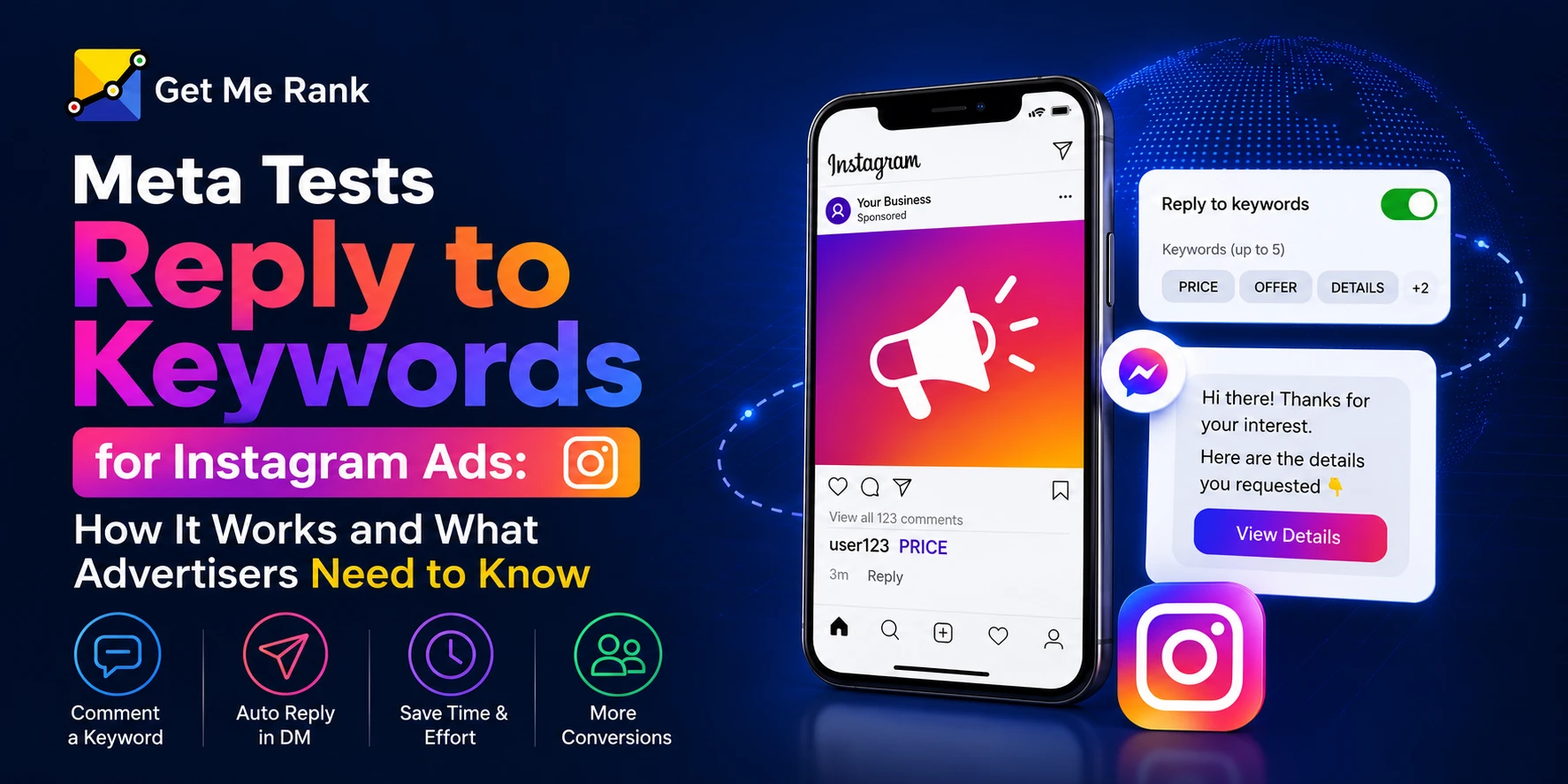
Meta is testing a new “Reply to Keywords” option inside its advertising tools that can automatically send a private Instagram message when someone comments on an ad using a specific keyword or phrase.
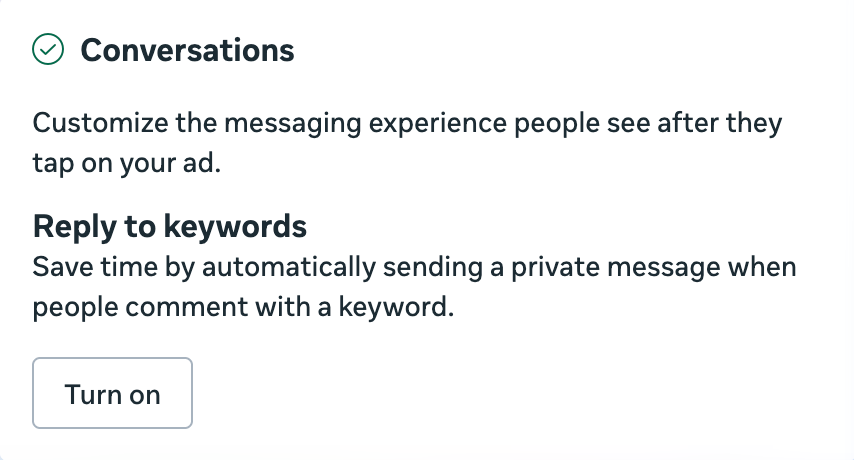
The feature could make it easier for advertisers to turn comments into direct conversations without manually responding to every interested user. It is currently appearing for some advertisers, so availability may vary by account.
Let’s take a closer look at how it works and where it could fit into your advertising strategy.
What Is “Reply to Keywords”?
Reply to Keywords is a Meta Ads feature that lets advertisers set specific words or phrases as triggers for an automated private message.
Meta Tests “Reply to Keywords” for Instagram Ads: How It Works and What Advertisers Need to Know
For example, imagine you’re promoting a free marketing guide and your ad says:
“Want the guide? Comment GUIDE below.”
When someone comments “GUIDE”, Meta can automatically send them a private Instagram message containing the information you’ve configured.
According to the current test, advertisers can define up to five keywords or phrases. They can then create the private message that will be sent when one of those triggers is detected. The message can include information such as a link, phone number, or email address.
The feature appears within the Conversations section of the ad setup process.
How Does Reply to Keywords Work?
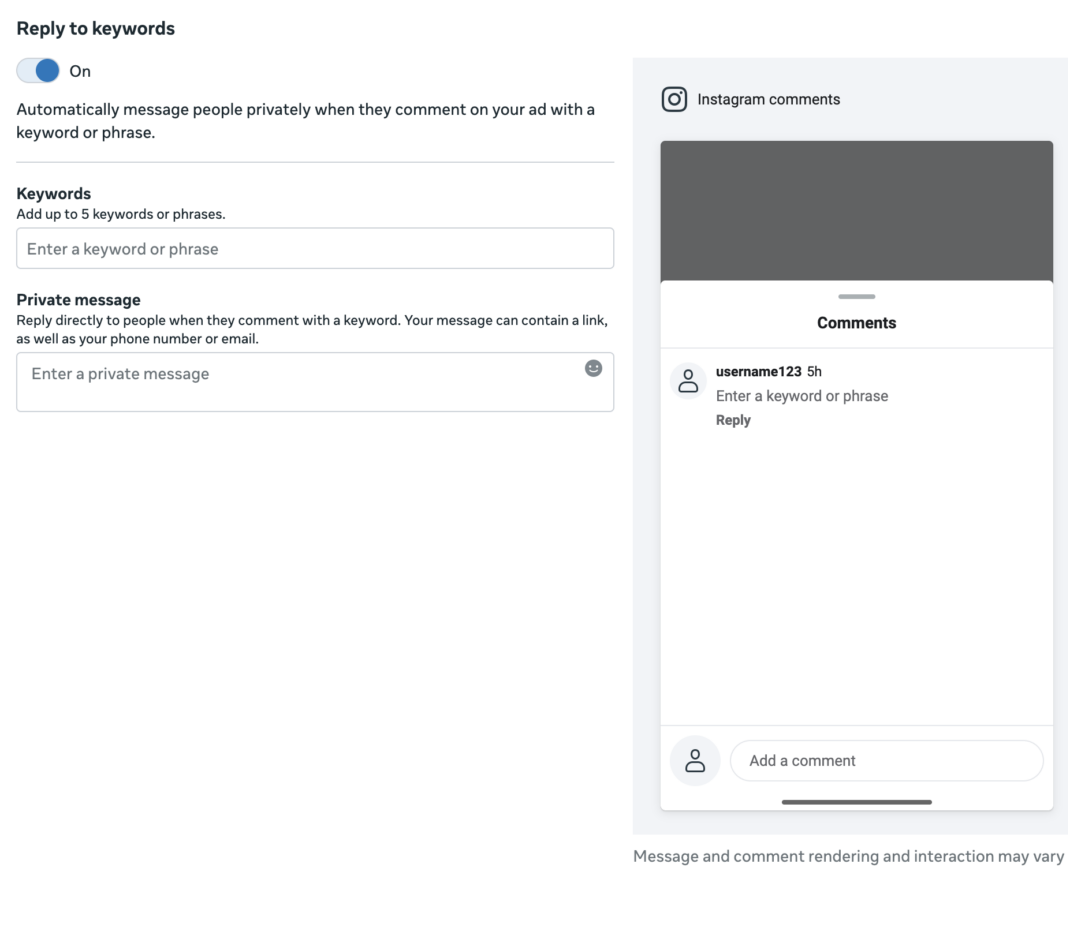
The setup is relatively straightforward.
1. Turn on Reply to Keywords
If the feature is available in your Ads Manager account, you’ll see a Reply to Keywords option within the ad creation process.
You can turn the feature on to begin configuring your automated response.
2. Add your keywords

Meta currently allows advertisers to enter up to five keywords or phrases.
For example:
- Guide
- Pricing
- Demo
- Discount
- Details
When someone uses one of the selected triggers in a comment on the promoted Instagram post, the automated message can be sent.
3. Create your private message
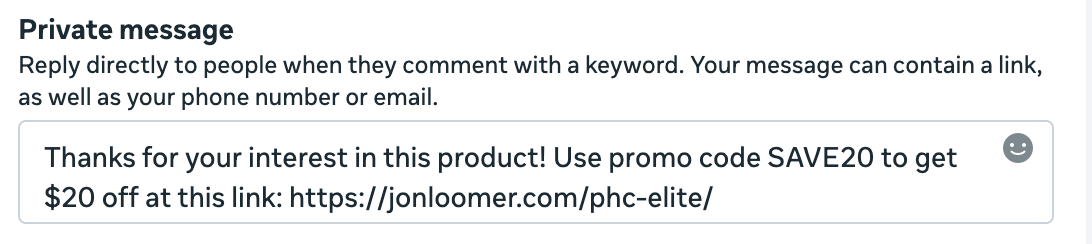
Next, write the message that the user will receive.
For example:
“Thanks for your interest! You can find our latest pricing and package details here: [link]. If you have any questions, feel free to reply.”
The message can include a link, phone number, or email, giving advertisers several ways to move the conversation forward.
4. Preview the experience
Meta also provides previews showing how the Instagram comment and private message will appear.
This gives advertisers an opportunity to check the customer experience before running the ad.
When Would You Use This?
There are a few situations where this feature could be particularly useful.
1. High-volume Instagram ads
If your ads generate hundreds of comments, responding manually to every question can quickly become difficult.
Someone might ask:
- “What’s the price?”
- “Where can I buy this?”
- “Can you send me the details?”
- “Do you offer a demo?”
Instead of manually handling every qualifying comment, keyword-based automation can take care of the initial response.
2. Comment-to-DM campaigns
The most obvious use case is a comment-to-DM strategy.
For example:
“Comment GUIDE and we’ll send you the free SEO checklist.”
You can then configure GUIDE as one of your keywords.
When someone comments the trigger, the automated DM provides the promised resource.
This can turn a simple engagement action into the beginning of a direct conversation.
3. Product or service enquiries
The feature could also work for businesses that regularly receive questions about pricing, availability, demos, or service information.
For example:
Comment: “PRICE”
Automated DM: “Thanks for your interest. You can view our latest plans and pricing here: [link].”
This can reduce the amount of repetitive manual work required from the marketing or sales team.
One Important Limitation
There is an important limitation to understand.
If you configure five keywords, they currently trigger the same automated private message rather than allowing you to create a completely different response for every keyword.
For example, you might want:
- PRICE → pricing information
- DEMO → demo booking link
- GUIDE → downloadable guide
But the current implementation doesn’t appear to provide that level of keyword-specific response customization.
That makes the feature more useful for situations where several keywords can reasonably lead to the same response.
Is It Available on Facebook?
Based on the current reports, the feature appears to be focused on Instagram advertising.
The screenshots and testing reported so far show the option within Instagram ad setup, and there is no indication that the current version works across Facebook placements.
That could change if Meta expands the feature in a future rollout.
How Is This Different From Existing Meta Automation?
The idea of automatically responding to comments isn’t completely new.
Meta already provides automation capabilities through areas such as Inbox automation and Meta Business Agent. The interesting part of this test is that Meta is bringing a keyword-triggered private response more directly into the Instagram advertising workflow.
That could make comment-to-DM campaigns easier to set up without relying on a separate workflow.
What Should Advertisers Do?
If you have access to the feature, don’t add keywords simply because you can.
Instead, look at the questions your audience already asks in your ad comments.
If people repeatedly ask:
“Price?”
“How do I get it?”
“Can you send the details?”
Those recurring questions can help you identify useful triggers.
You should also make sure that your automated message actually delivers what the ad promises. If you ask people to comment GUIDE, for example, the resulting DM should make it easy for them to access the guide.
The goal should be to make the conversation faster and more useful, not simply automate responses for the sake of automation.
The Bottom Line
Meta’s Reply to Keywords test is a small but potentially useful addition to Instagram advertising.
The basic idea is simple: someone comments a selected keyword → Meta automatically sends a private message.
For advertisers running high-engagement campaigns or experimenting with comment-to-DM strategies, this could reduce manual follow-up and create a smoother path from public engagement to private conversation.
However, the feature is still being tested, and the current implementation appears limited. Availability may vary, it appears focused on Instagram, and multiple keywords currently lead to the same automated response.
For now, the best approach is to test it if the option is available in your Ads Manager, monitor how users respond, and see whether automated comment-to-DM conversations actually improve your campaign results.
Quick Takeaway
Meta is testing Reply to Keywords to automatically DM Instagram users who comment selected keywords on ads. Advertisers can currently set up to five keywords or phrases, making it particularly useful for high-volume comments and comment-to-DM campaigns.
Frequetnly Asked Questions
1. What is the Reply to Keywords feature in Meta Ads?
Reply to Keywords is a Meta Ads feature that allows advertisers to automatically send a private message when someone comments on an ad using a specific keyword or phrase.
2. How does Reply to Keywords work in Meta Ads?
Advertisers can add up to five keywords or phrases and create an automated private message. When a person comments with a matching keyword, Meta can send the configured message directly to them.
3. How many keywords can I add to Meta Ads Reply to Keywords?
Meta allows advertisers to add up to five keywords or phrases when setting up the Reply to Keywords feature.
4. Can I include a link in the automated private message?
Yes. The private message can include a link, as well as contact details such as a phone number or email address, allowing advertisers to provide additional information or direct users to the next step.
5. Why should advertisers use Reply to Keywords in Meta Ads?
The feature can help advertisers respond to potential customers more quickly, reduce manual follow-ups, and move people from public ad comments into private conversations where they can receive relevant information.